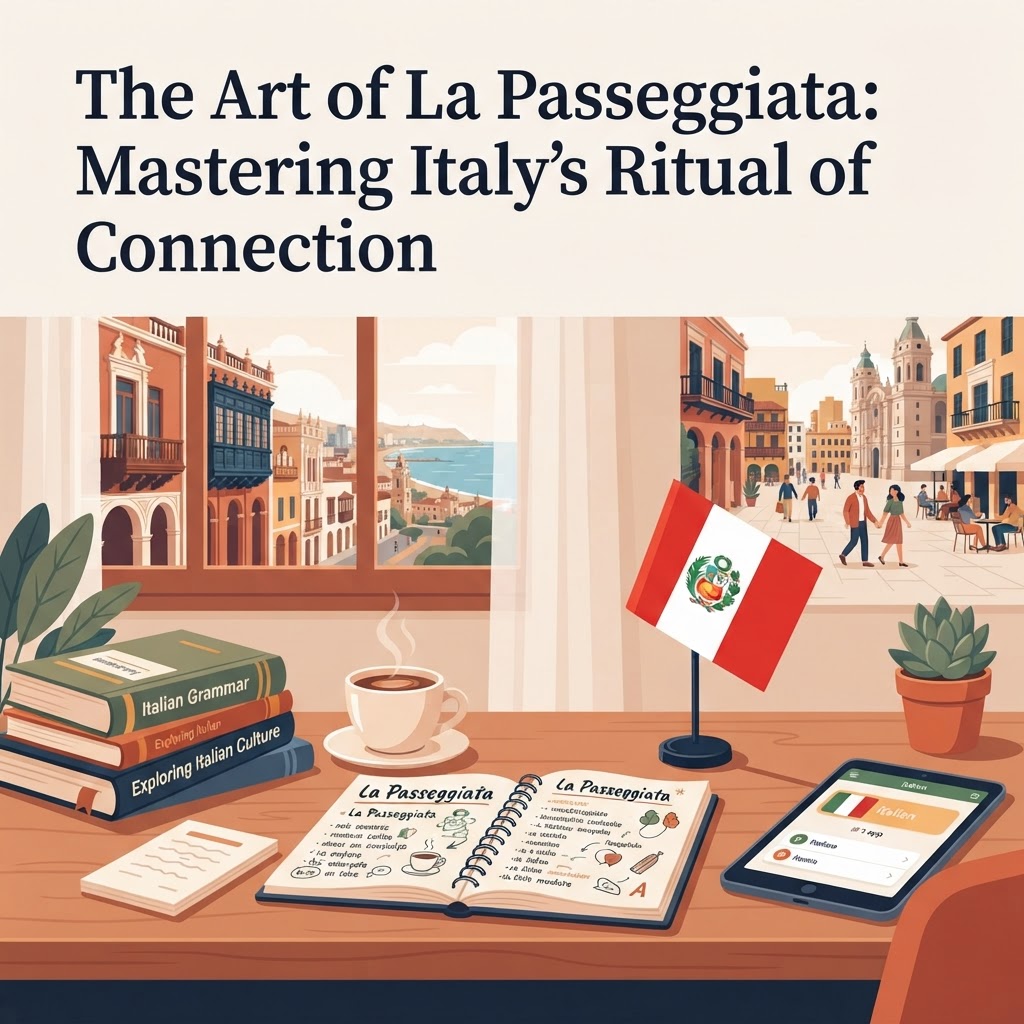
The Art of La Passeggiata: Mastering Italy’s Ritual of Connection
If you have ever spent an evening in a bustling Italian town, you likely witnessed a phenomenon that feels both timeless and choreographed. As the sun begins to dip and the heat of the day breaks, the streets suddenly fill with people. Families, couples, and groups of friends emerge from their homes not to reach a specific destination, but simply to walk. This is la passeggiata—the quintessential Italian ritual of the evening stroll.
For a language learner, understanding la passeggiata is about more than just knowing a vocabulary word. It is a window into the Italian soul, prioritizing community, aesthetic, and the slow pace of life. At Speakup Academy, we believe that mastering a language requires stepping into the shoes—literally, in this case—of the culture. Let’s explore how this tradition works and how you can participate.
More Than Just a Walk: The Philosophy of Connection
In many English-speaking cultures, walking is often a means to an end or a form of exercise. In Italy, la passeggiata (from the verb passeggiare, meaning to stroll) serves a social and psychological purpose. It usually occurs between 5:00 PM and 8:00 PM, bridging the gap between work and dinner.
The goal is simple: to see and be seen (vedere e farsi vedere). This is the time when news is exchanged, romances blossom, and the town’s collective pulse is felt. It is a slow, rhythmic movement through the main street (il corso) or the central square (la piazza). By participating, you are asserting your place within the community. For students in our live Italian lessons with Carmen Solari, we often discuss how these social structures dictate the way Italians use informal and formal address, as the passeggiata is a prime time for both.
Fare Bella Figura: The Social Etiquette
You cannot discuss la passeggiata without mentioning fare bella figura. Literally translated as "making a beautiful figure," it refers to the importance of presenting oneself well in public. While you don’t need a tuxedo, the "stroll" is not the time for gym clothes or flip-flops. Italians take pride in their appearance as a sign of respect for themselves and those they encounter.
When you join the walk, you’ll notice that people are dressed neatly—often in smart casual attire. This aesthetic extends to behavior. The passeggiata is a performance of civility. Conversations are lively but rarely raucous; the pace is leisurely, never rushed. It is the ultimate exercise in lo stare insieme (the art of being together).
Essential Vocabulary for the Stroll
To truly immerse yourself in this ritual, you need the right words. Here are 3-5 concrete examples of phrases you might hear or use during an evening in an Italian town:
-
"Facciamo due passi?"
- Translation: "Shall we take a short walk?"
- Usage: This is the standard way to invite someone to join the passeggiata. It literally means "shall we do two steps?"
-
"Prendiamo un gelato o un aperitivo?"
- Translation: "Shall we get a gelato or an aperitif?"
- Usage: The stroll is often punctuated by stops at the local bar or gelateria. These small transactions are perfect opportunities to practice your ordering skills.
-
"Si tira tardi stasera."
- Translation: "We’re staying out late tonight."
- Usage: Usually said when the conversation is too good to end and the stroll continues longer than planned.
-
"Che bella serata, vero?"
- Translation: "What a beautiful evening, right?"
- Usage: A classic conversation starter during the walk, reinforcing the shared appreciation for the environment.
Where and When to Experience It
Every Italian city has its designated route for la passeggiata. In Rome, you might find crowds flowing through Via del Corso; in a smaller Tuscan village, it might be a single loop around the fountain in the piazza. Sundays are particularly significant, as the stroll often follows the midday meal or evening mass, bringing out multiple generations of a single family.
If you are practicing your Italian through Speakup Academy's live sessions, ask your instructor about the specific passeggiata spots in their region. Since Carmen is based in Lima but teaches a global curriculum, she often highlights how these European traditions compare to Latin American paseos, helping you build a broader cultural perspective.
How the Passeggiata Improves Your Language Skills
Why does a walk matter for your Italian? Because it forces you to practice "active listening" in a low-pressure environment. If you sit on a bench during the passeggiata, you will hear a symphony of Italian dialects, greetings, and colloquialisms. You’ll hear people saying "Ciao, caro!" (Hello, dear!) or "Come va?" (How's it going?).
It also teaches you the rhythm of the language. Italian is a musical language, and the physical act of walking slowly helps you mirror the cadence of native speakers. In our live lessons, we encourage students to describe these scenes, building their descriptive vocabulary and improving their ability to tell stories in the past and present tenses.
Key Takeaways for the Language Learner
- The Intent Matters: The passeggiata is about social connection and community visibility, not exercise.
- Dress the Part: Remember fare bella figura. Polished presentation is a form of cultural respect.
- Learn the Ritual Phrases: Use "facciamo due passi" to initiate social plans.
- Observe the Piazza: The central square is the heart of the action; find a bench and listen to the natural flow of conversation.
- Slow Down: To speak Italian well, you must understand the Italian pace of life. Don't rush your sentences, and don't rush your walk.
At Speakup Academy, we believe that language is a bridge to a new way of living. Whether you are prepping for a trip to Florence or simply want to understand the nuances of Italian cinema, understanding la passeggiata brings you one step closer to fluency. Next time you're in a live lesson with Carmen, try using some of the vocabulary we've covered today to describe your own local rituals!