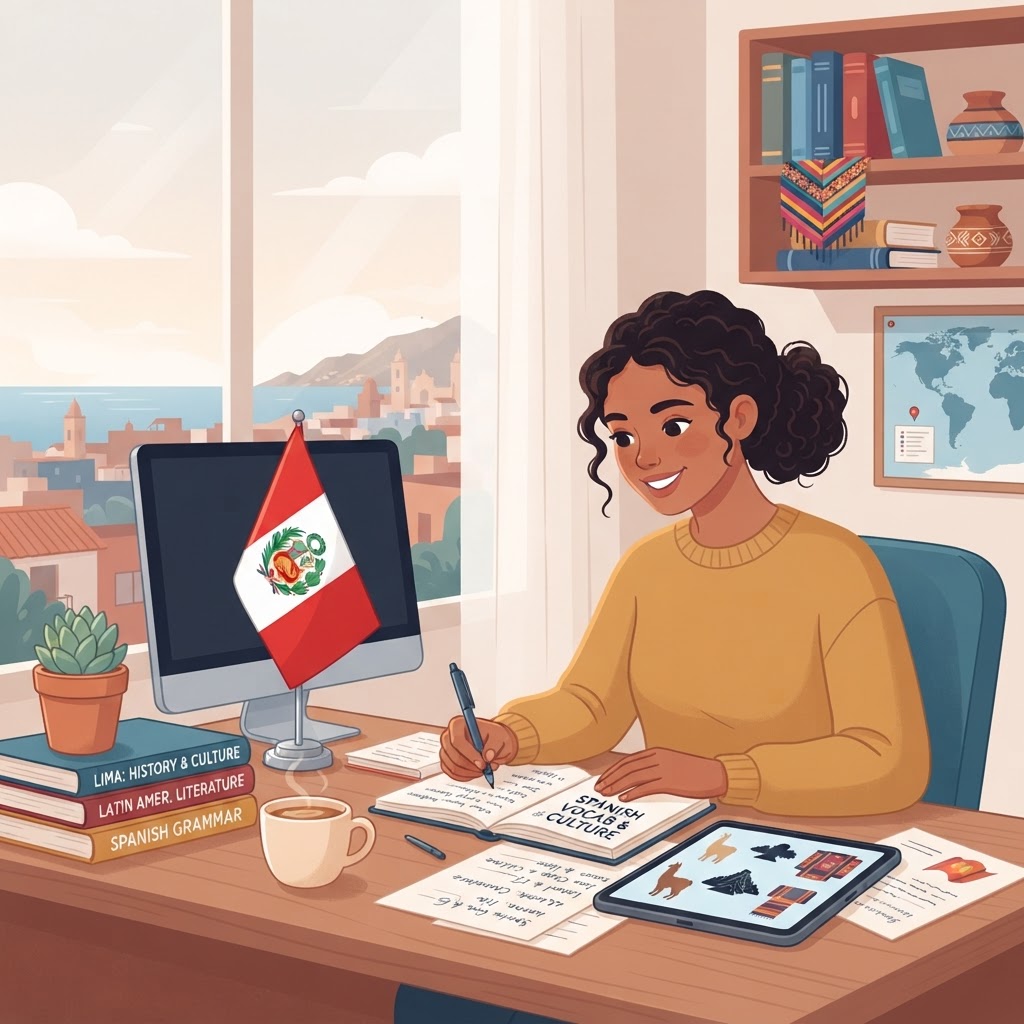
The Invisible Bridge Between Language and Culture
At Speakup Academy, we often see students who have mastered complex verb conjugations yet still feel like something is missing when they speak. They have the mechanics, but they lack the 'soul' of the language. This is because language is not just a collection of rules; it is a living reflection of the people who speak it. As Carmen Solari often emphasizes in our live sessions, you cannot truly learn a language without understanding the cultural values, history, and social habits that shape it.
When you learn a language in a vacuum, you are essentially memorizing a code. When you learn it through a cultural lens, you are learning how to think, feel, and connect like a native speaker. This shift in perspective is what separates a student who can translate a sentence from a speaker who can actually communicate.
Why Context Matters More Than Vocabulary
Have you ever translated a phrase word-for-word only to be met with a confused look? That is the 'cultural gap' in action. Every language contains nuances—idioms, forms of address, and non-verbal cues—that are deeply rooted in local customs. For instance, in many Spanish-speaking cultures, the way you address someone (using 'tú' vs. 'usted') isn't just a grammar choice; it is a social signal of respect, intimacy, or hierarchy.
Understanding these nuances helps you interpret the 'why' behind the 'what.' It allows you to navigate social situations with confidence, knowing not just what to say, but how to say it in a way that builds trust rather than confusion.
Practical Examples: Seeing Culture in Action
To move beyond the textbook, look at how idiomatic expressions reveal the personality of a language. Here are a few examples that show how culture colors communication:
- "Tirar la casa por la ventana" (Spanish): Literally meaning "to throw the house out the window," this idiom is used when someone spends a lot of money to celebrate something big. It reflects a cultural value of hospitality and the importance of grand celebrations.
- "Echar agua al mar" (Spanish): Literally "to throw water into the sea," this is used to describe doing something redundant or useless. It is a poetic way to express futility that is deeply embedded in the coastal geography of many Spanish-speaking regions.
- "Tomarle el pelo" (Spanish): Literally "to take someone's hair," this means to tease or pull someone's leg. It highlights the playful, social nature of communication in many Hispanic cultures.
How to Integrate Culture into Your Daily Practice
You don't need to travel abroad to start building cultural fluency. You can start today by changing how you consume media and interact with your target language:
- Engage with Authentic Media: Instead of just watching dubbed movies, watch local news, listen to regional podcasts, or follow social media accounts from native speakers. Pay attention to their gestures and the tone they use in different social settings.
- Ask the 'Why' Questions: During your next live lesson at Speakup Academy, don't just ask how to say a phrase. Ask your instructor, 'In what social context would I use this?' or 'Is this considered formal or casual?'
- Learn the Traditions: Research the holidays, food, and social etiquette of the countries where your target language is spoken. Understanding why a culture values certain things will make the vocabulary associated with those topics stick much faster.
Conclusion: The Path to Natural Fluency
Language learning is a journey of discovery. By embracing the cultural nuances behind the words, you transform your study sessions from a chore into a window into a new world. Remember, the goal isn't to be a perfect machine, but to be a bridge-builder. Keep exploring, keep asking questions, and let the culture guide your path to fluency.