The Trap of Isolated Words
Many students come to Speakup Academy feeling frustrated because they spend hours memorizing long lists of words, only to find they cannot recall them during a live conversation. The reason is simple: our brains are not designed to store isolated data points. When you learn a word like 'decisión' (Spanish) or 'decision' (English) in a vacuum, you are missing the 'glue' that holds language together. At Speakup Academy, Carmen Solari often emphasizes that words are not static objects; they are living components of sentences. To truly own a word, you must see it in its natural habitat.
Why Context is King
Learning vocabulary in context—through reading, listening, or structured conversation—allows your brain to map the word to its usage, tone, and grammatical neighbors. When you encounter a word in a story or a news article, you aren't just learning the definition; you are learning how it behaves. For example, instead of just learning the verb 'to make,' learn the collocation 'make a mistake.' By focusing on these chunks, you avoid the common pitfall of direct translation, which often leads to unnatural phrasing.
The Power of Active Production
Passive vocabulary consists of words you recognize when you hear them, but active vocabulary is what you actually use when you speak. To bridge this gap, you must practice production. After learning a new term, challenge yourself to write three original sentences using it. If you are a student at Speakup Academy, try bringing these sentences to your next live session with Carmen. Getting immediate feedback on your usage is the fastest way to solidify a new word in your long-term memory.
Practical Examples for Your Daily Practice
To move from passive to active, try these techniques with your target language:
-
Collocation Focus: Instead of learning 'decisión' alone, learn 'tomar una decisión' (to make a decision). Example: 'Es difícil tomar una decisión importante rápidamente.' (It is difficult to make an important decision quickly.)
-
The 'Three-Sentence' Rule: Whenever you look up a new word, write three sentences about your own life using that word. Example (English): 'I am looking forward to my next Spanish lesson.' (Using the phrasal verb 'look forward to' instead of just 'expecting'.)
-
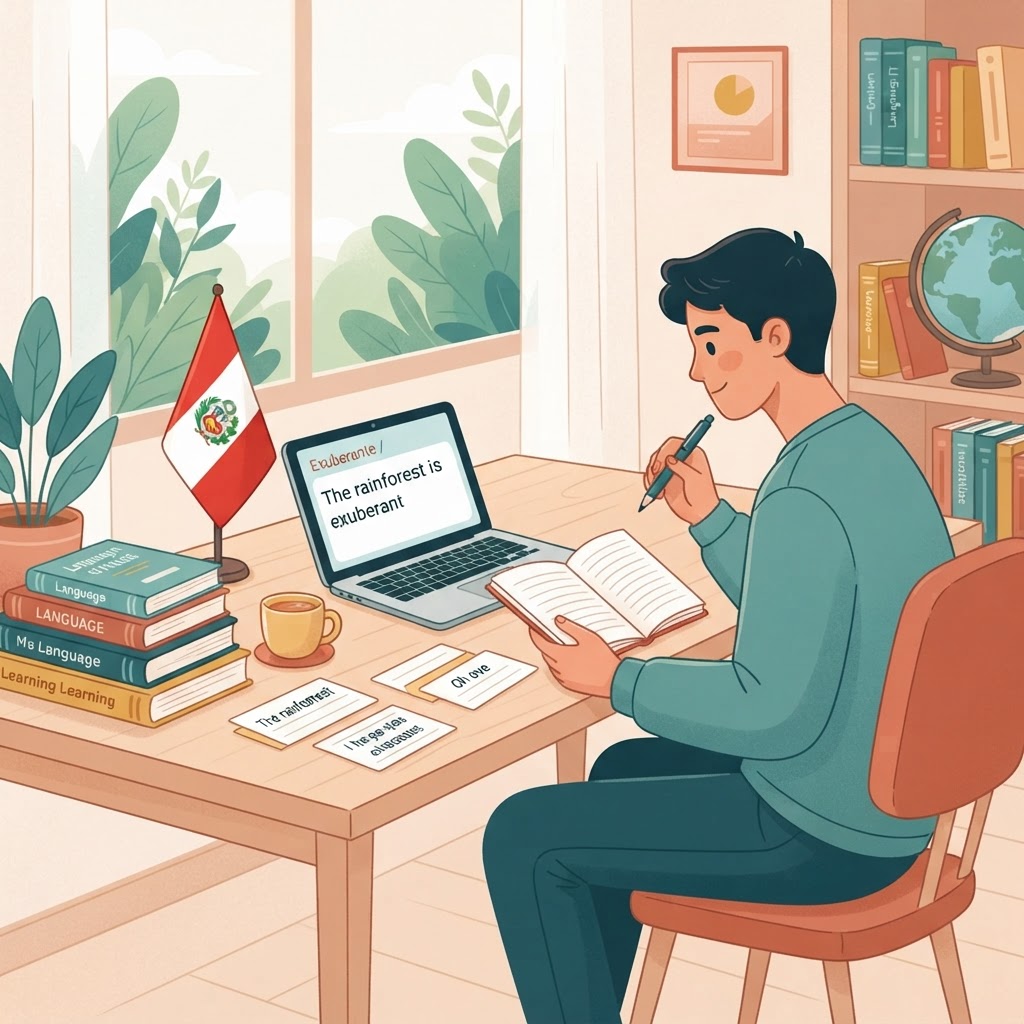
Contextual Flashcards: If you use flashcards, never put a single word on the front. Put a full phrase or a short sentence with a blank space. Example (Italian): 'Ho bisogno di ____ un caffè.' (I need to have a coffee.) Answer: 'prendere'.
Spaced Repetition and Consistency
Consistency beats intensity every time. Rather than studying for three hours once a week, spend 10 minutes daily engaging with your target language. Use spaced repetition to review words at increasing intervals. This ensures that you are not just cramming for a test, but building a foundation for real-world communication. Remember, the goal is not to be a walking dictionary, but to be a confident communicator.
Key Takeaways
Stop memorizing isolated lists and start learning in chunks. Focus on collocations, prioritize active production by writing your own sentences, and maintain consistent, short daily practice sessions. By shifting your focus from passive recognition to active usage, you will find that your vocabulary grows more naturally and stays with you long after your lessons end. We look forward to seeing you put these strategies into practice in your next session at Speakup Academy!