Beyond the Menu: The Heart of Spanish Social Life
When you travel to Spain or interact with native speakers, you quickly realize that dining is not merely about sustenance—it is the primary social activity. At Speakup Academy, we often tell our students that learning a language is inseparable from understanding the culture that breathes life into it. If you want to move beyond the basics of ordering food, you must understand the unwritten rules of the table.
In Spain, the pace of life is dictated by the clock of the kitchen. Mealtimes are later than in many other parts of the world, with lunch (la comida) typically occurring between 2:00 PM and 4:00 PM, and dinner (la cena) rarely starting before 9:00 PM. Understanding this rhythm is your first step toward blending in.
The Sacred Ritual of Sobremesa
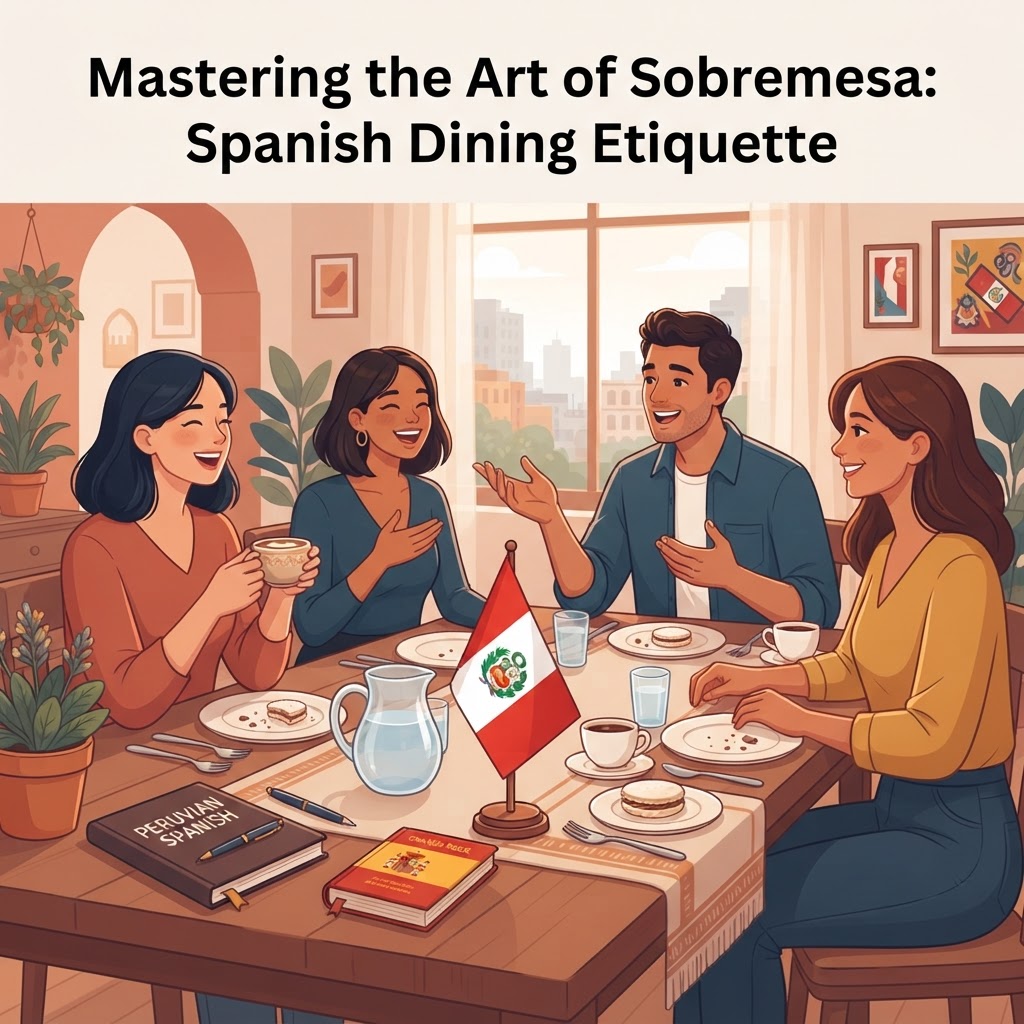
Perhaps the most beautiful aspect of Spanish culture is la sobremesa. This term refers to the time spent at the table after the meal has finished, while the plates are cleared and coffee or digestifs are served. It is not a time to rush out; it is a time for connection. In a world that often prioritizes efficiency, sobremesa is a deliberate choice to prioritize people.
During these moments, the conversation flows freely. It is the perfect environment to practice your Spanish in a low-pressure setting. If you are looking to improve your conversational fluency, our live lessons with Carmen focus on exactly these types of real-world scenarios, helping you feel confident enough to linger and chat.
Essential Phrases for the Table
To navigate these social settings with grace, keep a few key phrases in your pocket. Using these shows respect for the local customs and helps you build rapport with your hosts or fellow diners:
- "La cuenta, por favor." (The check, please.) — Use this when you are finally ready to leave, but never rush the waiter while others are still talking.
- "Te invito." (It’s on me.) — A generous phrase used when you want to treat a friend. It reflects the communal spirit of Spanish hospitality.
- "Donde comen dos, comen tres." (Where two eat, three can eat.) — A classic idiom used to express that there is always enough food to share, emphasizing the welcoming nature of Spanish dining.
- "¿Se puede pagar con tarjeta?" (Can I pay by card?) — Always helpful to clarify before the bill arrives, though carrying a little cash is never a bad idea.
Navigating Social Etiquette
Spanish dining is often loud, expressive, and communal. Do not be surprised if you find yourself in a restaurant where the volume is high; this is a sign of a vibrant, healthy social atmosphere. When sharing tapas, remember that these small plates are meant to be enjoyed together. It is considered polite to ensure everyone has had a taste before finishing the last bite.
If you are invited to a Spanish home, remember that arriving exactly on time is not strictly required. Being 10 to 15 minutes late is often considered perfectly normal. Bring a small gift for the host, such as wine or dessert, and prepare for a long, engaging evening. The goal is not to finish the meal and leave, but to build a relationship through conversation.
Key Takeaways
To summarize your journey into Spanish dining culture: respect the later mealtimes, embrace the long, lingering conversations of sobremesa, and remember that the language you learn is a tool for building genuine human connections. Whether you are practicing your idioms or perfecting your pronunciation, remember that every interaction is an opportunity to grow. If you need a partner to help you navigate these cultural nuances, our team at Speakup Academy is here to support your progress through personalized, live sessions.