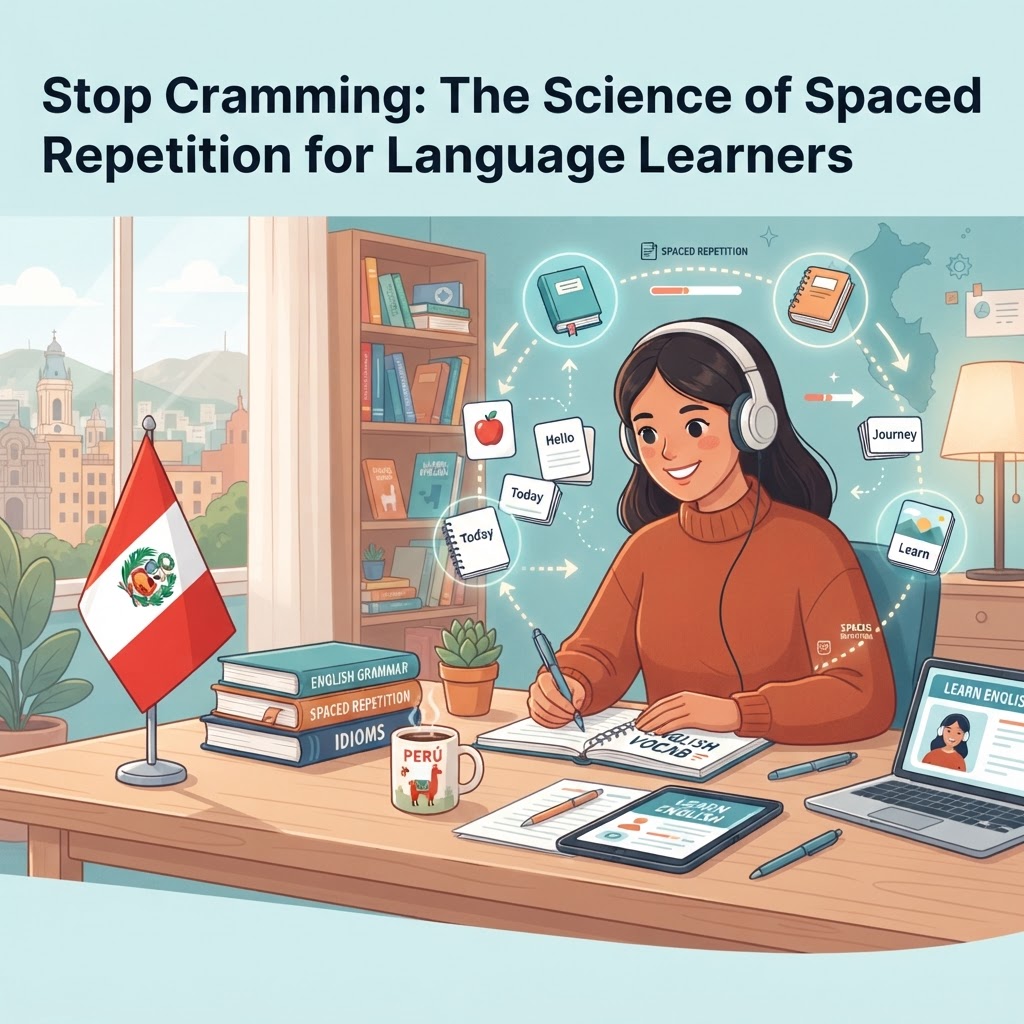
The Myth of the Marathon Study Session
We have all been there: sitting down for a three-hour block on a Sunday, desperately trying to memorize a list of verbs. By Monday morning, most of that effort has evaporated. At Speakup Academy, Carmen Solari often reminds our students that language learning is not a test of endurance, but a test of consistency. The secret to retention isn't studying more; it is studying smarter using evidence-based techniques like spaced repetition and active recall.
What is Spaced Repetition?
Spaced repetition is a learning technique that involves reviewing information at increasing intervals. Instead of cramming, you revisit a word or grammar rule just as you are about to forget it. This forces your brain to work harder to retrieve the information, which strengthens the neural pathways associated with that memory. Research consistently shows that this method is significantly more effective than rote memorization or passive rereading.
Active Recall: The Engine of Fluency
Active recall is the practice of testing yourself rather than passively consuming content. If you are reading a textbook or watching a video, stop every few minutes and ask yourself: "What did I just learn?" Try to explain the concept or use the new vocabulary in a sentence without looking at your notes.
Here are three practical ways to apply this today:
- The "Self-Talk" Narrative: As you go about your day, narrate your actions in your target language. For example, instead of just thinking, "I am making coffee," say out loud: "I am brewing a fresh cup of coffee to start my morning." (Spanish: Estoy preparando una taza de café fresco para empezar mi mañana.)
- Flashcard Retrieval: Use digital tools or physical cards to test yourself. If you see the word "resilient," don't just read the definition. Force yourself to recall a sentence: "She was resilient despite the many challenges she faced."
- The 15-Minute Micro-Session: If you have a busy schedule, use 10-15 minute blocks throughout the day to review one specific grammar point or five new words. This keeps the language "warm" in your mind.
Integrating Techniques into Your Routine
To make these hacks work, you need a system. You don't need to be perfectly organized, but you do need to be intentional. If you are currently taking live lessons with Carmen, use your session time to practice the structures you have been reviewing during your micro-sessions. When you bring your own "active recall" questions to a live class, you transform a passive lesson into a high-impact coaching session.
Why Consistency Beats Intensity
It is better to study for 15 minutes every day than for three hours once a week. By spacing out your practice, you allow your brain the necessary time to consolidate information. If you find yourself struggling to stay consistent, try linking your language practice to an existing habit, such as reviewing vocabulary while you drink your morning coffee or during your commute.
Conclusion
Language learning is a marathon, not a sprint. By moving away from passive study habits and embracing active recall and spaced repetition, you will find that your vocabulary sticks longer and your confidence grows faster. Remember, the goal is to make the language a natural part of your daily life. If you are looking for a structured environment to apply these techniques, our team at Speakup Academy is here to help you turn these study hacks into real-world fluency.