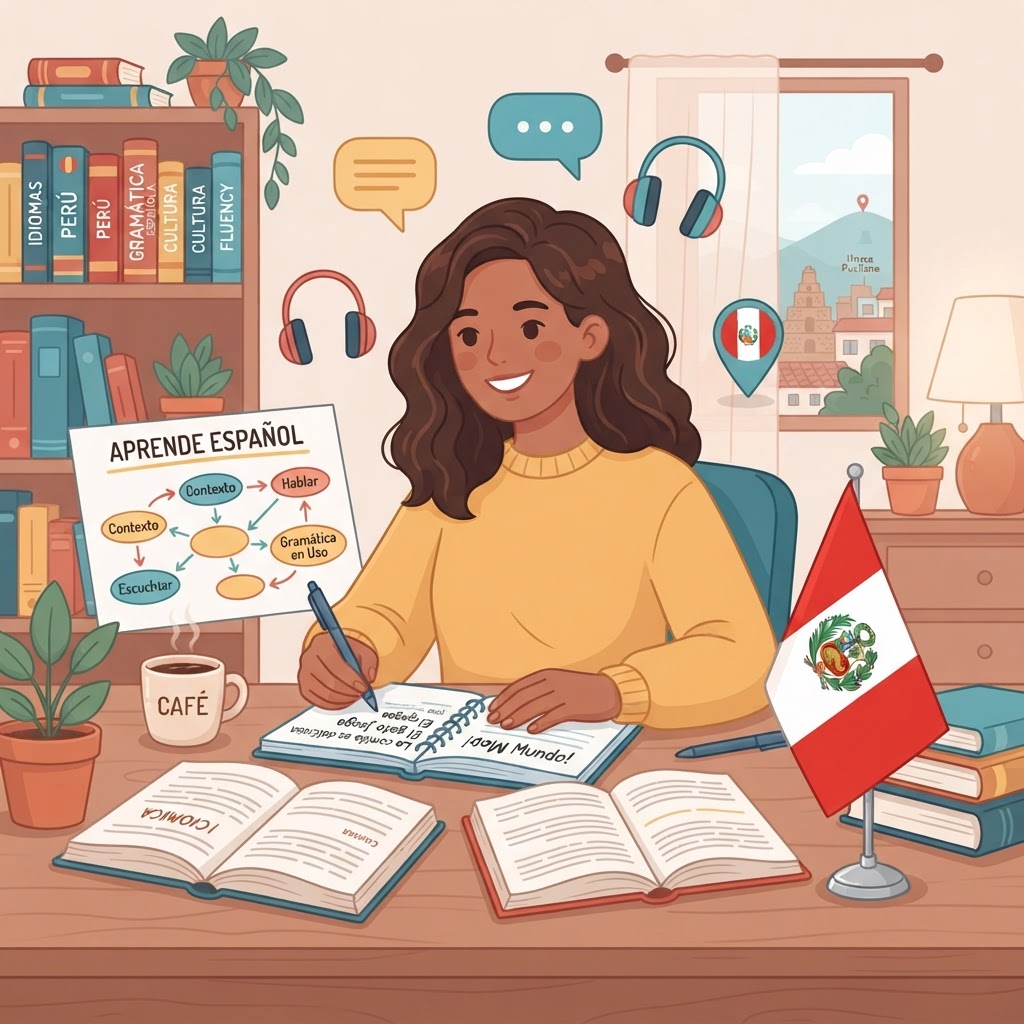
The Grammar Trap: Why Textbooks Aren't Enough
Many adult learners fall into the same cycle: they spend hours highlighting rules in a grammar book, only to freeze up the moment they try to speak in a real conversation. At Speakup Academy, we often see students who know the theory perfectly but struggle to apply it. The truth is, grammar is not a standalone subject to be mastered in isolation; it is the skeleton that holds your language together. When you study it as a list of abstract rules, you miss the 'why' behind the language.
Grammar in Context: The Power of Stories
Instead of memorizing verb tables, try 'acquiring' grammar through content that actually interests you. Whether you are learning Spanish, English, or Italian, the most effective way to internalize complex structures is to see them in action. When you read a story or listen to a podcast, your brain naturally notices patterns. For example, instead of just learning the 'past tense' rule, you see how a narrator uses it to sequence events in a story. This makes the grammar feel like a tool for communication rather than a hurdle to jump over.
The 'Habit Stacking' Approach
Consistency beats intensity every time. You don't need to spend two hours a day on grammar exercises. Use the 'habit stacking' method: link your language practice to something you already do. For instance, if you drink coffee every morning, commit to reading one short article or listening to five minutes of a podcast in your target language while you sip. By keeping your sessions short and repeatable, you avoid the burnout that comes from heavy, dry study sessions.
Turning Mistakes into Milestones
Fear of making mistakes is the biggest barrier to fluency. At Speakup Academy, Carmen Solari always emphasizes that errors are not failures—they are data. When you make a mistake, don't just move on. Note it down, look at the context where it happened, and try to understand the pattern.
Consider these common areas where context helps clarify the rule:
- Spanish (Ser vs. Estar): Instead of memorizing a list, think of ser as the 'essence' (permanent) and estar as the 'state' (temporary). Ella es alta (She is tall - essence) vs. Ella está cansada (She is tired - state).
- Italian (Gender Agreement): Always learn the noun with its article. Don't just learn 'vino' (wine); learn 'il vino'. This builds muscle memory for gender agreement naturally. Il vino è buono (The wine is good).
- English (Phrasal Verbs): Don't memorize lists of phrasal verbs. Learn them in phrases. Instead of 'give up', learn 'I decided to give up smoking' to see how the verb functions in a real sentence.
Why Live Interaction Matters
While self-study is vital, there is no substitute for live feedback. A certified educator can help you identify the specific patterns you are missing and guide you toward more natural phrasing. During our live sessions at Speakup Academy, we focus on using grammar to express your own ideas, which helps move that knowledge from your 'passive' memory into your 'active' speaking vocabulary.
Key Takeaways
Stop treating grammar as a chore. Shift your focus from memorizing rules to observing how they function in real-world contexts. Keep your daily practice short, link it to your existing habits, and embrace your mistakes as the fastest path to improvement. Remember, language is a tool for connection—use it, live it, and don't be afraid to speak up.