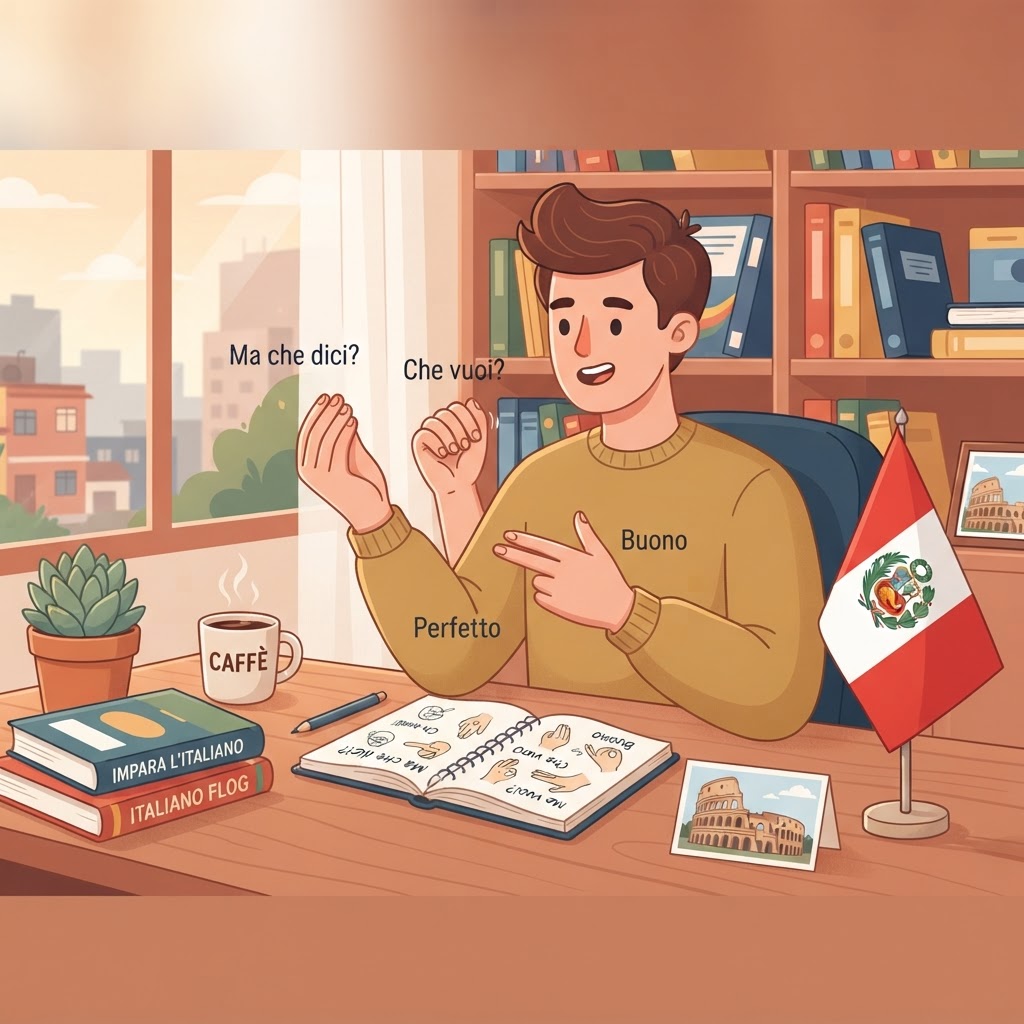
The Silent Language of Italy
If you have ever watched an Italian conversation, you have likely noticed that the hands are just as busy as the mouth. In Italy, gestures are not merely decorative; they are a fundamental part of the lexicon. With over 250 identified gestures, this non-verbal system acts as the punctuation, emphasis, and emotional color of the language. At Speakup Academy, we often tell our students that learning Italian is a full-body experience. Whether you are preparing for a trip to Rome or simply want to sound more natural during your live lessons with Carmen, understanding these cultural codes is essential.
Why Do Italians Gesture So Much?
Historians suggest that Italy’s rich gestural history emerged from necessity. Throughout centuries of invasions and colonization by Greeks, Arabs, Normans, and others, the peninsula was a melting pot of different languages. Gestures provided a universal, non-verbal bridge that allowed people to communicate across linguistic barriers. Today, this tradition persists as a form of 'cultural coding.' While northern regions like Milan tend to use more subtle movements, the southern regions—particularly Naples—are famous for a highly expressive, theatrical gestural repertoire.
5 Essential Gestures to Master
To help you bridge the gap between textbook Italian and real-world fluency, here are five iconic gestures you should know:
-
La Mano a Borsa (The Purse Hand): Bring your fingertips together to form a point and move your hand up and down. This is the ultimate Italian gesture. It can mean "What do you want?" (Ma che vuoi?), "What are you saying?", or even "This is perfect!" depending on your facial expression.
-
Non Mi Interessa (I don't care): Flick the back of your fingers under your chin in an outward motion. It is a clear, concise way to say "I am not interested" or "It doesn't matter to me."
-
Così Così (So-so): Hold your hand flat, palm down, and rock it side to side. Use this when someone asks how you are or if you liked a movie, and you want to express that it was just "average" or "so-so."
-
Stai Attento (Watch out): Place your index finger on your cheekbone under your eye and pull slightly. This is a warning gesture meaning "pay attention" or "keep an eye on the details."
-
Che Capolavoro! (What a masterpiece!): Kiss your fingertips and then pull your hand away from your mouth as if you are blowing a kiss. This is the perfect way to compliment a delicious meal or a beautiful piece of art.
Avoiding Cultural Pitfalls
While gestures are a wonderful way to connect, context is everything. Some gestures can be misinterpreted if used in the wrong setting or with the wrong intensity. For instance, the "chin flick" can mean "no" in the south but "get lost" in the north. As you practice, observe how native speakers use their hands to emphasize their tone. If you are unsure about a specific movement, feel free to ask during your next live session at Speakup Academy—we love exploring these cultural nuances with our students.
Conclusion: Bringing It All Together
Learning to gesture like an Italian is about more than just moving your hands; it is about embracing the passion and directness of the culture. By incorporating these non-verbal cues into your practice, you will find that your Italian sounds more authentic and your confidence grows. Remember, language is a living, breathing thing—don't be afraid to let your hands do some of the talking. We look forward to seeing your progress in our upcoming classes!