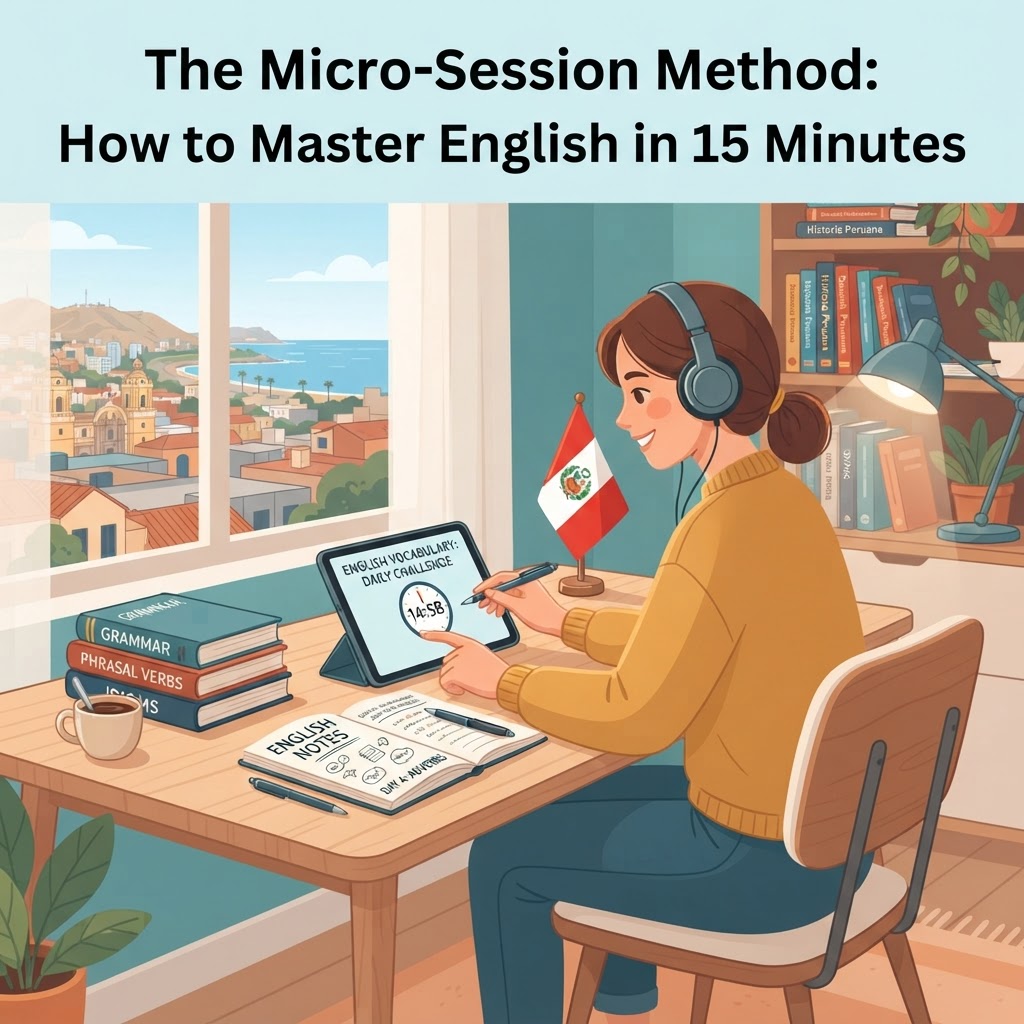
The Myth of the 'Perfect' Study Session
Many adult learners fall into the trap of believing that unless they have a full hour of quiet time, they aren't really studying. You wait for the weekend or a quiet evening, but by the time you sit down, you are exhausted. This 'all-or-nothing' approach is the fastest way to stall your progress. At Speakup Academy, Carmen Solari often reminds students that language acquisition is a game of frequency, not just duration. Instead of chasing the elusive hour, we recommend the Micro-Session Method.
What is a Micro-Session?
A micro-session is a focused, 10-to-15-minute burst of active language engagement. The goal isn't to finish a textbook chapter; it is to perform one specific task that forces your brain to retrieve information. By breaking your study time into smaller chunks, you lower the barrier to entry, making it easier to stay consistent even on your busiest days.
Habit Stacking: Linking English to Your Day
To make micro-sessions stick, use 'habit stacking'—the practice of attaching a new behavior to an existing routine. If you already have a morning coffee or a daily commute, that is your window. Here are three concrete examples of how to integrate this into your life:
- The Coffee-Break Narrator: While waiting for your coffee to brew, describe your immediate surroundings in English. Example: 'The kitchen is quiet, but the coffee machine is making a loud hissing sound. I hope I have enough milk for my latte.'
- The Commute Summary: If you take public transit, summarize your day in your head or a notes app. Example: 'Today was productive. I finished the report, but I still need to email the client about the meeting schedule.'
- The 'One-Word' Challenge: While doing chores, pick one object and try to describe it using three different adjectives. Example: 'This chair is wooden, sturdy, and slightly uncomfortable.'
Moving from Passive Input to Active Output
Passive listening—like playing a podcast in the background—is helpful, but it won't build fluency on its own. Your micro-sessions must be active. If you are between live lessons with Carmen, use these 15 minutes to practice 'output.' This means writing a short paragraph, recording a voice note to yourself, or practicing a specific grammar structure you struggled with in your last session. The key is to produce language, not just consume it.
Why Consistency Beats Intensity
Language learning is a marathon, not a sprint. A 15-minute session done daily is significantly more effective than a three-hour cram session once a week. When you study in small, frequent bursts, you keep the language 'warm' in your mind. This makes your live lessons at Speakup Academy much more effective, as you spend less time reviewing basics and more time engaging in complex, real-world conversation.
Key Takeaways
Stop waiting for the perfect hour; embrace the 15-minute micro-session. By linking your English practice to existing daily habits and focusing on active output rather than passive consumption, you will see faster progress. Remember, consistency is the secret ingredient to fluency. Use these small windows to keep your skills sharp, and bring your questions to your next live session with us at Speakup Academy.